
Craft an SEO friendly 1000-word article based on this youtube script My name is andre marco i’m the director of the european roundtable on climate change and sustainable transition and uh we are working with our turkish colleagues in terms in terms of setting up this but webinar which is part of our project on the role of civil society in developing climate change policy
Uh this is part of a broader project uh entitled eu Turkey climate policy dialogue so we are now waiting for people to come in and would like to give it a few minutes uh for uh as people stream in and then usually take a little bit of time uh so let’s
Give it a just a few minutes i will try and walk you through the the process Very well ambassador welcome as well it’s good to see you and thank you very much for taking the time to join us thank you very much very thank you great to see you all well it’s it it’s it’s an important dialogue that we uh we hope that people
Will use this as a learning tool but what i will do is i’ll wait another minute and then we’ll get started i think that we have a busy agenda and we wanted to make sure that everybody has the uh the time to intervene and have the time to uh to participate
So what time is it uh no i’m sorry i left my this tells you something that we should learn from uh having uh between a telephone with a very precise uh time and a very expensive watch that is not so precise i think with this i’m beginning to
Understand why people go to telephones so uh in any case let’s get started in that case again good morning my name is andre marco i repeat this is the project entitled eu Turkey climate change climate policy dialogue with this particular webinar the role of civil society in developing climate change policies
We have had a number of activities under this project we uh it’s a very it’s been quite a fascinating project for us we have uh worked with our colleagues only team in in and in a number of projects including this one and uh we have learned quite a few about
Uh the development of climate change policy in in Turkey we worked on on cbam impact on Turkey we worked on article six and and and the connection to the development of market mechanism in Turkey but this has been a fascinating one because we are also part in many
Ways of the debate in in brussels and in europe and globally because we are working on some topics at the global level so the participation of civil society is of great importance but it needs to be done in in the right way and and in in its input needs to be recognized
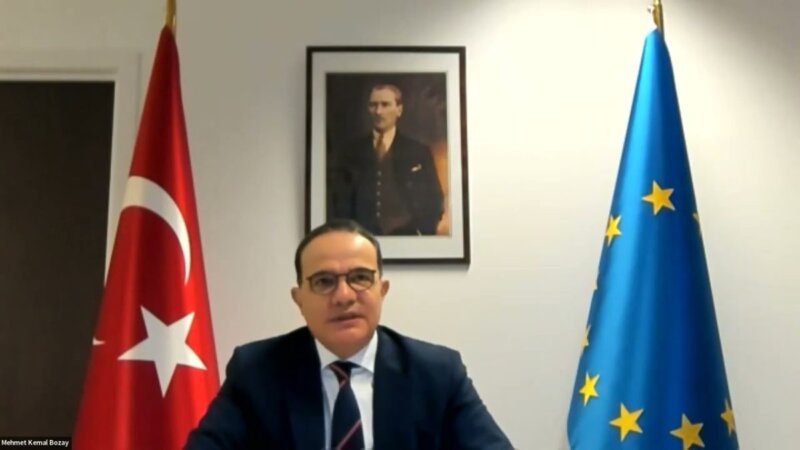
So what i will like the way i would like to to handle this is that uh the agenda starts with a keynote speech from from ambassador mehmed kemal bozai the ambassador permanent delegation of Turkey to the european union after which uh my colleague marina monciatti who actually has been the dynamo
Behind this whole project will uh have a presentation on the overview of the role of civil society in eu policy development processes and he will try to outline the way the processes work in eu and the role of civil society in those the policy formation dialogues and then a number of presentations
Presentational climate change policy articulation processes from eu civil society and we try to have a broad spectrum of of many people from civil society in europe with benjamin dennis from the industrial all european trade union a very important uh factor in the in the transition discussion emanuel from bureau the association of cement
Producers europe beyond coal and again an advocacy a member of the civil society and then daniel around the carbon market watch so we tried to have business we have tried trade unions but also uh two of the more campaigning ngo civil society members and then a number of reaction from uh
From the turkish civil society hazal from the energy industrialist and businessman association in in Turkey benji su the sustainable economics and finance research association and the turkish exported assembly so again we try to find as much diversity on both sides because there will be different points of view and different way of
Approaching this dialogue uh you know we i was having a discussion with my my my colleagues here this morning and you know i’m i i lived in both sides i live in on both sides of the atlantic in canada and the eu and there were it’s in very interesting
Experiences on both sides how civil society interacts uh in in policy formation you know in in the eu you’ll hear it in the canadian case you know you go in front of the on the on the energy board to raise your electricity prices and as a as a company
You have to pay for the interveners to actually make their intervention if they are deemed to be a representative intervenor so there are different ways but in this case we’re looking at the eu and i would like to start by inviting ambassador bozai to give this keynote speech ambassador you have the floor
Distinguished so thank you very much it is very kind of you and i’m very happy to be in this eminent group to have some discussions and to be the keynote speaker this is also a very timely event and also i’m here uh with my team in charge of
These climate issues but this is a wider team than you have seen because of the covered restrictions we have only two of the members actually we had you know some different arrangements in inside our mission as well we divided the mission to to to to different big sections
One is a green transformation and the other is this agenda and also we have changed our structure in a way in a horizontal way because we have so many representatives from different ministries but this is a matrix that it needs all inclusiveness and in that sense we feel that the
The Turkey climate dialogue should be also as inclusive as possible and civil society has to take it up and carry all these issues on these issues and to create awareness in all segments of the society turkish society and we are thankful to having this program all the participants all the stakeholders are very
Welcomed by us uh and Turkey as as a candidate country uh the main aim of Turkey Turkey to be the the member of the union but in order to be that we have a lot of way to go we know all these i don’t want to go to
The details of this but for me to be a member or to be on the same basis page with the eu is to have this harmonization and to also have the same standards eu which is a for the last decades in the 21st century which is stuck between us and china
Because of uh research and development innovation and other issues found a new arrangement and this is this climate policies is at the center of these arrangements and Turkey knows that this transformation between transformation could only be possible to have a good and uh solid climate policy this is
Why this year we are trying to have our legislation as a solid legislation on climate issues and in this preparatory process we have completed its own roadmap and then this roadmap to support the green transformation of its economy and published we published this green deal action plan on 16th july 2021
And before we prepared this plan we had also very good uh consultation cooperation with all relevant turkish ministries from here from uh brussels because what is the duty of this mission the permanent delegation is to report in a correct way where the trends are going and then what is happening in
The climate sector and also after these reflections you know even we renamed the environment and organizations as enviro environment urbanization and climate change ministry this is also you know to give the concepts and to put the titles correctly helps us also to create awareness in the society also to have
Inside turkish administrative system a real good place for climate change issues i’ll get i’ll go back to the our green action plan the action plan includes 81 specific actions to be implemented under uh nine main areas these are known areas carbon border adjustment mechanism green and circular economy green finance a clean
Economic and secure energy supply and you know i don’t want to derail from our subject but this clean economy secure energy supply is getting more and more important especially in the in the new geo strategic tectonic moves that is also i just want to make a bracket here and also sustainable
Agriculture sustainable as smart mobility combating climate change diplomacy and awareness raising activities and we are doing our best but you know when the first thing we did for the first time we started this high-level dialogue for environmental issues vice president timmermans hosted our minister of environment in in
Brussels last september and at that time i would like to share one striking strike striking conversation with vice president timmermans and with my minister and we asked for you know more cooperation with eu the tim herman’s in a kind way said we’re ready to have all kind of cooperation
But you know this paris agreement is one of the sinan koa of these things and then he said that if there would be any move there of course there would be a better cooperation and also i took to floor and i said that it would be good in any case
To make us to prepare ourselves for all these changes there’s some working groups and also my minister said yes we would like to work in groups on etc and also adaptation to climate and tim hermann said okay let’s work on it and the next day after we
Ratified paris agreement i came to my office it was uh early in the morning i found a letter from timer man’s office side by time asking us he is ready telling us he is ready to have these working groups immediately and you know this is an
Action reaction part of it and i believe that civil societies as i just mentioned at the beginning to create this awareness ownership it is very very important for us um i would like to especially touch on the clean economy and secure energy supply as i also mentioned at the beginning of my uh
Statement Turkey needs to transition its energy system rapidly in order to reduce it is its reliance on imports which account for three out of four units Turkey‘s total primary energy supply this is a big number because our population is growing and also Turkey‘s imported energy costs have reached high levels
Driving a significant share of turkish current account deficit as well Turkey‘s population you know from 70 million only in a decade uh come to 85 million people it the equivalent of adding a metropolitan region the size of you know ryan brewer in germany or chicago in the united states it’s a big
Big change and then the energy need of this growing population is also increasing and in any case uh also one thing is missing maybe we should also concentrate on that maybe civil societies should also uh develop on it and also to make both eu side both
We use side and Turkey side to get more uh aware about uh you know energy transition of the positive story of the turkish energy transition today renewable energy accounted for over 30 percent of all turkish electricity electricity generation still we need to do more for the transition of our energy system to a
More secure affordable and sustainable model and to meet our ambitious energy and climate goals but 30 percent is a good number another important area of climate achieves every culture the contribution of agriculture to total use greenhouse gas emissions around 10 percent most of which resulting from the livestock production whereas in Turkey
This this percentage is higher it is 13. 13.4 percent we are aware of the substantial enforced by the eu in terms of adaptation of european agri-food systems to climate change is put forward by green demand especially by farm to form and by biodiversity biodiversity strategies and with this
Aim we are also planning to start high-level dialogues between uh dg agri i mean the dvd commissioner in charge of ugly agriculture and armies of agriculture to bring the commissioner to Turkey this is important this is as i told it is a matrix we need to combine all
Components it’s not only to deal with you know the transportation we should deal with energy transportation agriculture environmental issues from different aspects and this is why now we are also having some more parts so more participation of civil society organizations because governments they play a critical role but the the
Civil society organizations are at this correspond of these activities as well and they play a crucial role in bringing ground level vulnerabilities into decision making process this is very important we should be uh we should be fully aware of what’s happening in the ground what are the needs of you know the people
In their daily work and we should carry to this decision-making process by providing technical support and research to have this creating awareness as i mentioned building capacities and enhancing resilience of the most vulnerable population this is i think one of the crucial role of the civil society organizations to have in this
State as a stakeholder uh and we are doing it formal informal activities and this today’s activity is also i believe it’s a very good project we should continue with it and what i see that there are experts that i knew from some other activities and i see very eminent academicians and also
With your team i’m sure that we will be doing more and more in in this direction and now you know another important development we are having this climate council and in climate council we are mainly concentrating on civil society needs and uh over then 1 000 representatives from public institutions
Universities scientists business people farmers activists uh gathered in the central province of konya and the meetings are still going on and before coming to this gathering i also got in touch with our authorities they are also very happy to see that especially the youth young generation is very keen and
Very you know active in these discussions and they are also forcing broadcasts and also some you know uh authorities uh to to work more anyway now uh also what i feel uh maybe maybe i i will not make it more uh maybe the discussions might also
Give me a chance to talk a lot about all these things also you know yesterday there is this console decision i believe you might have a look for that this is the council conclusion on eu climate diplomacy and this diplomacy is very important accelerating the implementation of classical outcomes as
Approved by the council on 21st february and yesterday it was published i just also went through it and i believe that there is uh there are different areas to cooperate in uh for example the the goal of eu is to carry all these issues into uh its programs like eastern partnership
Also to do something in the western balkans and Turkey is having an interconnectivity in these regions interconnectivity is not only transportation and roads and other things we should have interconnectivity between civil societies of these countries which eu is also fully engaged uh and Turkey is just in the middle of
This interconnectivity line i believe that maybe we can work on these roundtables under your auspices under your programs we should have more programs to bring balkan countries to this roundtable to bring caucasian countries are you guys can you guys hear us okay so it’s okay so i think the ambassador’s connection froze
I think this is okay this is the imponderable it’s always an importable in this shall we give it 30 seconds and see what what happened because i think there was very important points the ambassador was making about the infant intercontinentally maybe he is disconnecting ambassador i bet i i i was
Excitingly talking but i don’t know where i left no actually i was i was mentioned you were mentioning about the importance of intercontinental interconnectivity and i was mentioning that unfortunately the image got froze but there was a very important point so please continue yes yes i was just telling that interconnectivity is not
Only transportation not anti-tank energy and transportation connections it is also a connection between civil societies of different countries and interconnectivity between balkans caucasia turkeys in the middle and i believe that with your indulgence and with your involvement we can work on having this roundtable more round and more big and to have all
These interconnectivity between civil societies of azerbaijan georgia armenia bosnia serbia macedonia and i believe the awareness could also create a good cycle and circle of uh civil societies which are creating better understanding in their own societies in in a bit bigger in a bigger scale
I think i talked a lot a lot when you make a key a diplomatic keynote speaker this is the risk you take and i’ll stop here and then i’ll be very happy to hear and follow the discussions thank you very much to all participants and to you distinguished director thank you thank
You uh mr ambassador and very important points about the intercontinentality and the relationship that between neighbors uh and and that neighbors that are getting close and and that have very long and and and strong relations and the interconnectivity is on not the economic but in the continuity of of
People and organizations and in our connectivity of culture and culture means many things but this culture of participatory policy development is a it’s a very important element uh considering uh in everybody’s particular uh particularity because countries are different and and needs are different and stages are different so we all
Respect our own individual particularities but we learn from each other and and having this connection this uh connection between the eu and Turkey will only and the rest of the neighborhood the balkans the caucus you mentioned are very important elements i i continue to to drive through europe and
While maybe it is not as fashionable as it was when i grew up you still see this this thing which is a leftover from after the war about little towns and villages in in you throughout europe being twinned the french and the germans and the and
And and and the swedes and you see them twins with each other and this has played a played a role in getting to know each other and getting to get closer so again mr ambassador thank you very much for your inspiring speech and now i would like to invite my my
Colleague marina monciatti to talk about the overview of the role of civil society in eu policy formation process so marina do you want to stay sit here because i think sitting at the side of the table maybe not the best go ahead please thank you hello everyone
My name is marina manchati and i’m a policy analyst at ercst i work mainly on the eu Turkey dialogue but also on just transition policies as well as supply chain decarbonization and other international climate policy development processes so this project we started it in april
Last year and as part of the project we have done extensive consultations with both turkish and european civil society organizations going from associations to ngos grassroots between others and today i will specifically focus on the european um how european civil societies engage in articulating climate policies but i will keep in mind
The needs of turkish civil society and i will put this into context when i will um do this presentation as part of the presentation at the end i will provide two examples of how civil societies in europe engage into policy processes and then we’ll give a few recommendations of how this could be
Useful or also replicated in in Turkey or how they could be used as a best practice so just to uh quickly put into context um not everyone always knows but civil societies is also called as a third sector so it’s neither the public neither the private it’s the it
Represents the voices of the citizens and it is the part of the society that bridges the gap between uh the voices of the citizens and the communities with the public sector so it’s an extremely important part of the society and this is why um if we
Look for example at article 15 of the treaty of functioning of the eu it recognizes that civil society has is has an important role in good governance in the eu and when we look at the treaty of the eu in article 11 it says that um
The eu has to have an open transparent and regular dialogue with civil society organizations when preparing eu laws for example there we make an example of the public consultations that are done at the commission level when uh when when a law is proposed and it’s there when
Civil societies in europe can provide an input why is civil society important well there are um there are a number of innumerable amount of points that can be stated but it is uh in our context civil societies are very important to overcome the challenges of unsustainable development and achieve a sustainable
Growth and the carbonization there also contributing to effective policies uh and sustainable development they make sure that the there is transparent and accountable governance so they usually civil societies also help to make sure that the processes are being transparent and properly uh being taken into account into legislative processes
They contribute to social welfare i don’t think the slides are running there are some comments and it’s the same for us what happened she sees the comments okay i think that i know i i think i know ah yes she’s seen and now with yeah we always forget that we have two
Screens it’s a problem yeah perfect thank you thanks um yeah and of course civil society increases the access points for for citizens into policy development processes and if this uh this is not allowed actually civil society can create shadow conferences and shadow uh processes that will allow them to contribute into
Uh policy development right so even if there’s not it’s there’s not much space for civil society to articulate into policy there can be other processes and uh lastly it increases bottom up participation of course it allows more uh more people in the in the society to contribute and it helps to
Balance the power between the established elites especially when we talk about politics so here it’s there are different classifications of civil societies and we did this classification for this for purpose of the climate policy dialogue so we focus on i’m showing here their business and sectoral association where
We have for instance umbrella groups such as business europe that encompass a lot of the business businesses in europe uh bdi for instance is also encompasses the private sector but in germany and also in the sectoral association groups we have the different sector sector by sector association such as
Semburu which we’ll speak after which is for cement uh we have sepi which is for pulping paper we have fuels europe for the fuel sector then if we go to the environmental ngos we have a myriad of uh of ngos in and grassroots organizations in europe here
I will give a few examples we have today carbon market watch year beyond cold uh wwf but apart from environmental ngos there are bingos so business ngos there are growth switches grassroots ngos uh ringo’s research ngos and this can be shown to the right but they wouldn’t fit
In the whole slide so i didn’t put them there and then we also in the civil society we have think tanks and academia and there we have rugel sepps agora given in germany and a few other important players trade union and employers associations of course a key key player in the civil society
We have industrial we have he took uh if we look for instance in italy we have cgi in france we have cgt and finally we have also network associations that encompass a broader group of other ngos or they also focus on a certain region for example bankruptcy network focuses on eastern europe
So some of the tools um that can be used for campaigning and communication vs city society are listed here and it is important to mention that depending on the nature of the civil society this can be they can use different tools right so business ngo business associations could use advocacy and lobbying
While uh some um academic or think tank civil societies could instead use sharing best practices or offer technical research an important here point to mention also is cooperation on partnerships and providing joint statements so when an organization or an association in europe uh provides a joint statement
And a statement that a common goal then it’s much easier for the civil society to achieve this goal in the policy process and um and have a clear goal to what what they want when they’re going to approach the the policy development so this is a few of the of the other
tools and uh communication uh that can be used for for articulating into policy and in order to to understand then afterwards what are the specific channels this is just to show quickly the institutional structure of the eu so on the top left we have the three uh
Legislative bodies of the eu which have let’s say the heaviest weight so the european commission the council and the european parliament which are the ones that actually um make lost but we also have the advisory bodies so the economic and social committee committee and committee of the regions and actually the economic
And social committee represents uh the civil society bodies in the in the european union it has 350 members and these members then can provide advice to policies to the decision makers so the three triangles we have on the top but this the european uh economic and social committee cannot do policies themselves
And then of course we have the european policy council on the top right which is the head of the member states but they provide mostly guidance to what should be the future and what should be the um the the most important goals to be taken in the eu
And based on that we we understand where and how civil societies in europe can provide feedback and can interact if we look again at the european commission the parliament and council which which are the legislative bodies there are different ways different channels where civil societies can articulate the first one
And most important one is the have your say platform so this is when associations citizens ngos come into the commission and when there is a proposal of legislation they provide a feedback or a position afterwards also there are alliances and coalitions that the commission creates such as the clean
Hydrogen alliance and there we have civil societies we have hydrogen groups coming in we have advisory support platforms and these are quite important for example for just transition sustainable finance and there in these platforms they allow different civil societies to come in and be part of this platform and engage into
The policy development provide advisory afterwards we have expert working groups uh for example the high-level expert group of energy-intensive industries and there we would have sexual associations such as samburo we would have euro fair euro electric and other energy-intensive industries the two last points from the european commission they are more on uh
Relations with civil societies outside the eu so we have the eu country road maps for engagement with civil society outside and these are roadmaps that are creating with different uh countries and lastly we also have the thematic group for civil society organization which is a new um an automatic group that has been
Proposed for also civil society engagement if we look at the parliament uh civil society can engage with the parliament by arranging meetings with members members of parliament and their assistance and providing amendments to certain proposals or legislations and when we go to the european council of course since the european council
Embeds different member states then it is up to the member states how open they are in accepting the proposals of different um of different civil society groups lastly in the european economic and social committee as i mentioned is an advisory body but it represents the civil society and it has employers trade
Unions various economic and social interest actors include including environmental ngos and they provide important advice to those three legislative bodies so the council the parliament and the commission and it is also crucial to mention how what are the financing options and of course there are different grants
Uh and eu funds that can uh support civil societies such as the europe’s first citizens program erasmus plus life horizon and all of this provide funding for specific projects for civil society also public government funding so if you look in germany for example we have the elky project funding
We also can have uh membership fees bilateral government support uh multilateral organization support and other types of mechanisms so this is important also to mention that nonprofit organizations in the eu receive tax break and this allows actually for civil societies that are in struggle to operate with with less expenses let’s see
And as an example here i’m mentioning the carbon border adjustment mechanism and to the left we can see the javier say portal and here it’s the different stages of the legislation in the of the seba there were actually feedbacks being provided at the at each stage right so we can see
When the roadmap was published we had 224 feedbacks when already afterwards there is the public consultation so more targeted questions on the roadmap are provided we have a we had a higher feedback of 614 and lastly at the commission adoption we have 194 feedback of feedbacks on the on the sebum
Another example of uh of an interesting engagement process for civil societies in the eu is the just transition platform and the territorial just transition plans within the just transition platform in order uh apologies for in within the just transition fund in order to receive money you have to prepare a territorial
Just transition plan and why is this uh a good governance approach this is because each territorial justice transition plan has to be prepared at local level with regional stakeholders with civil societies and ngos that put inputs into the most pressing issues for those territories to transition
I’m here seeing an example of the slovak republic that in order to prepare this territorial just transition plan uh plan they had thematic working commissions and these working commissions had all sectors of the society different spectrum of the society so local governments ngos youth movements etc in
Order to prepare this uh this plan so this gives a more uh decentralized approach in preparing um in preparing these plants and then this plant actually will allow the disinversement of money into the most efficient way that will go to to the most needed regions to the
Most needed citizens and as well as workers to to conclude a bit um we have in our analysis we have noticed that if a civil society has a solid organizational structure and technical preparation in a certain area for a certain policy it is much easier for them to articulate into climate policy
Especially if we talk about technical policies such as the eu ets sebum etc there needs to be preparation and uh rationale for the positions that the civil society has put forward the relationship between states and civil society can be delicate um but there and sometimes there is civil
Societies can feel that there is no space for them into into the policy processes uh to articulate into policy there then uh what we suggest is to um use media and outreach in order to um to raise public awareness and as well it’s also important funding
And financing for as a key enabler for cso’s operations and we have noticed this when we were doing the the stakeholder consultations in Turkey that many civil societies are lacking enough funding in order to operate and be able to to run properly so there actually if the civil society are well prepared
Uh they are organized they have their um they have everything to coordinate it properly it is easier for them to receive money from multilateral organizations or also from the private sector so membership funding that will allow them to uh operate and lastly if funding university is
Received from the public it it has to be uh we have they have to be careful not to fall into heart control mechanisms that then make the government let’s say steer towards their aims instead of the aims of the civil society and on the last point an interesting example would be to use
For instance uh since Turkey is transitioning and they have uh also on call it would be interesting to apply some of the best practices from the territorial just transition plans into the turkish transition process and see how that would increase participation of civil society
And i think with this i will um yeah we will have a few different organizations presenting for the eu side and the Turkey side and it will be interesting to hear their take on this and what they how they operate how they articulate into climate policy thank you marina what you
What you have to understand this is something very close to our heart because we as a a think tank operate every day in this uh in this world of uh of civil society in the world of participating in the in the policy formation and in the relationship with other
Members of civil society as well as the policy makers and it’s always a very balancing delicately balanced act to do because you have different actors some of them would be think tanks that are relatively independent and that will will have a mission in life there are others of organizations that are more militant
On certain topics there are other organizations that represent a membership so one has to look at all this all this this is landscape and different actors with different very different roles the other act that you continuously have to balance and i’m not telling anybody anything new but is this relationship that you have
With your your donors and that is also a very delicate relationship you know i can tell you that you know we we have as ercsd and i think we’re here to to share experiences we have uh we receive money from companies receive money from association receive money from governments
And it’s always a very delicate uh very very delicate kind of approach because you know people will support those that they they think they want to support but uh at the same time we for instance try very very hard to maintain independence so unattached money it’s kind of the whole the holy grail
And the big syntax they’re really truly truly independent think tank have a lot of of uh if you are unattached money with long-term funding that’s that’s reality so the more you see that in the society the more you see think tank the more you see if you want civil society organization with long-term
Funding independent funding unattached funding the more you know that you’re dealing with independent organizations that can’t speak nobody is totally free you know once you think the queen is chilling let’s be blunt about it there is something the queen has to say about it but it nevertheless there are different shades of grey
And and that’s something that we all have to know when we have this relationship and this participation in in policy formation so anyway this is part of our experience but we would and we’re happy to continue to contribute the experience very transparent as to who we are and how we operate
But we have a couple from the eu side which tied with benjamin davies dennis from industrial europe trade union and you know the trade in industrial world has been active in policy formation we’re happy to hear that they are acting because there’s an important voice that needs to be heard
It’s not a marginal voice it’s not an additional voice but it’s a very central voice benjamin thank you uh andrei thank you marina for the invitation to participate to this really important discussion um maybe to to start with um just let me say a few words about who we are
And then i will tell you what we think about climate policies and what we do to promote uh what we think uh who we are um so we are a trade union organization we are a european trade union federation representing workers from various industrial sectors extractive industries energy and manufacturing industries too
Including energy-intensive industries automotive ship buildings aerospace and defense so all together we represent about seven millions of men and women active in these industrial sectors in europe but our members are 180 national trade union organizations coming from 40 european countries including Turkey so being a european trade union federation gathering eu and non-eu
European countries we of course highly uh value the dialogue that we are having today and we of course fully uh acknowledge and uh and and stress the important role that civil society organizations have to play and are already playing in many ways in developing climate policies so this is
For who we are now um what do we think as trade unions we have to say loud and clear and remind that there is no job on the planet and that we fully subscribe to the carbon neutrality objective as well as we uh and we fully support the uh upward
Revision of the eu 2030 emission reduction target so in in a nutshell we fully support the climate neutrality objective uh the objectives of the european green deal as well as the climate law on recipe to reach these targets these objectives can be captured in two words as you can see
With the banner on my background those two words are just transition i will not enter into a kind of semantic discussion about what just transition really means as you might know the ilo the international labor organization has adopted guidelines that really help to make the just transition narrative operational but usually we see
Three dimensions in the just transition and i will basically briefly explain what we mean by those three dimensions and more precisely and more interestingly uh what we do to promote those various aspects of just transition in the the current discussions about eu climate policies so for us the first the first um
Pillar of of the just transition is and must be a forward-looking sustainable industrial policy based on strong climate and sustainability requirements and we want that industrial strategy of course to create quality jobs maybe just a few numbers to start with when we talk about energy-intensive industries in europe so steel chemical industries cement
And so on and so forth we talk about a little bit less than eight million jobs in europe when we talk about automotive industry we talk about 2.6 direct million jobs in the in the eu and if we consider the whole value chain related to the automotive industry uh it accounts for
Uh 14 million of of jobs in the in the eu and we don’t believe that we can reach climate neutrality in two or three decades without having an impact on those jobs and for us uh keeping and creating quality jobs in the eu is of course a key objective what do we
Do to promote that approach when it comes to industrial policy just i can only mention a few a few examples here first we are actively involved in the eu industrial forum which has been created a few months ago and where stakeholders and the european commission dg grow this time are co-creating transition pathways
For 14 ecosystems we also support and are as far as we can engaged in the industry alliances that the eu has set up to accelerate the deployment of key technologies we can mention the battery alliance or the hydrogen alliance just to mention two examples
In the context of the of the fit for 55 package we have tabled a series of amendments uh for instance in the context of the revision of the ets or the setup of a carbon border adjustment mechanism to kind of contribute to set up a system which will drive investment through
Carbon pricing in the transformation of the industrial base and we support for instance ids of climate neutrality plans we support the idea of recycling revenues for innovation fund and we off also sorry support um the setup of of a sebum um to complement the existing framework
To uh tackle the risk of of carbon leakage i can enter into more details if you want later the second dimension of the just transition narrative is a set of labor-related policy instruments to support workers and communities on the pathways on the pathway towards climate neutrality the creation of the the just transition
Mechanism and the just transition fund that marina already mentioned is actually the result of trade union lobbying during the past the previous reform of the of the ets we um all together with the with the etuc and industrial europe we promoted the idea of using part of the ets revenues to
Create a just transition fund in the eu that id was kept was taken on board by the parliament but unfortunately we had to face some resistance on the side of the council but we were pleased and happy to see that a few years later the id came back on the policy agenda and
That we now have a just transition fund made of 17.5 billion euros for the budgetary the current budgetary period but beyond the fund we now have a just transition platform and the policy mechanism where through which regions that are still relying on on fossil fuels and on calls will have access to fund
Under the condition that they design just transition territorial plans and we are still actively involved as industrial europe in the work of the just transition mechanism we have also in the eu governance of the energy union where under which member states have to prepare and submit national energy and climate plans
In the the regulation um of the year of the governance of the energy union um necps and national climate plans must include a social chapter and nacps must be submitted to social partners so social partners must be consulted and involved in the preparation of those nacps this is a way through which
European trade unions at member states level trade unions um can can have a role in in the design and and building of of climate policy another aspect which is quite important for us in terms of labor related policies is of course skills and the eu has launched a series of of initiatives
Under one umbrella initiative which is the skills alliance and we are involved as a as a sexual trade union in a series of part for skills for instance for the automotive for instance for offshore renewables or for instance for the rail supply industry all those sectors are of course
Sectors that are extremely important to reach carbon neutrality in the eu after industrial policy after the labor the labor market policies i’m now entering into the last dimension of the just transition which is the active use of social dialogue and trade union participation we believe that this is a key aspect of
The transition um marina mentioned a series of key principles of the eu treaty and i would like him to stress that social dialogue is really deeply enshrined into eu treaties and legislation and i can see that it’s already time for me to uh to conclude
I can only refer to article one five one and one one five one five one two one five six uh where social dialogue is really presented as a fundamental component of the european social model it enables social partners representing workers and employers to contribute uh to uh in uh to um to um
Uh designing european social and employment policies including through agreements i cannot make here full list but i would like to mention the importance of some agreements that have been achieved through sexual social dialogue committees as industrial europe we co-signed with euro electric an agreement on uh just transition in
The electricity sector and we also launched a joint project with eurogas in the context of the sexual social dialogue committee dealing with with gas i also would like to remind the importance of existing instruments that we have in the eu first of all the european works councils where
Trade unions and employers can practice social dialogue to anticipate change in multinational multinational companies sorry we also have a directive on information and consultation rights which imposes a series of obligations for employers in the case of restructuring i can only briefly mention the fact that today the commission will publish
A due diligence draft directive with a climate provision it will be interesting for us to see how we can promote the social dialogue principles in the context of that directive of course social dialogue only exists if collective bargaining is possible and if workers rights are respected and i can
Only briefly mention the fact that il core conventions number 98 on right to organize and collective bargaining convention and the convention number 87 freedom of association and right to organize those ilo core conventions are key to enable workers to effectively in reality play their role in social dialogue so in
To conclude we have indeed a policy framework which allows trade unions to play a certain role and and clearly progress has been made during the last decade when it comes to just transition now many challenges remain when it comes to how existing rights are implemented in reality we see
A lot of problems when it comes to enforcement of information and consultation rights we see a lot of trade union busting in in europe in eu and and uh in uh european non-eu countries and we see a lack of effective involvement of trade unions in many aspects of the climate governance uh for
Instance and ecps or territorial just transition plans for us fit455 package will entail an unprecedented industrial transformation given its space and its scope and the eu needs more dedicated financial resources and a stronger legal framework to anticipate change as trade union organization we are also doing of course our homework with our
Affiliates through projects to make capacity building projects to collect best practices and better understand specific challenges as a european trade union organization we have been playing an active role on this climate policy design for many years and we will continue to do so in strong and close a relationship with
Our main affiliates including turkish trade union organizations thank you the role of of trade unions and the contribution maybe uh a bit more and when we come back if we have time on on how do you actually interact with all these these bodies that would be also intriguing manuel
Uh stem bureau is one of the if you’re on one of the big associations in brussels there are a number of associations around town that part of the the part of the furniture so to speak uh you know some bureau cefec euro fare fuels europe euro electric
These are kind of the the fertilizers the jacob hansen is going to forgive me for that so all these people that we know and they pop up regularly at these meetings uh you interact with your members and you interact with the policymaker the you know if you want it with the euro
Institutions or the member states with other uh and other civil society members uh tell us a little bit about what what are your goals and how do you actually go about this town and do your job thank you andre and thanks a lot for the invitation and interesting discussion
I’m indeed delighted to be here and also probably give the perspective of a business association um on how we we interact on climate policy uh so firstly just a few words about some bureau indeed way with their station of the european cement industry but i also would like to mention that we
Have some non-eu members within our membership so for instance the uk switzerland as well as Turkey and in fact for Turkey it’s turksy mentos who’s the turkish cemetery who are a member of sembiro there’s a very vibrant cement industry in in Turkey and we’re really delighted
To have them as part of our membership i think ambassador bozai also explained in his speech how things are changing and and how also Turkey joined the paris agreement we do feel this in terms of our cooperation with mr cemento and we have a number of workshops actually
Being set up with them on on the carbonization so i think it’s a very uh very strong and positive evolution but indeed we are a business organization and um and and the uh objective of some bureau of course is to advocate on behalf of the urban cement industry
But here i’d like to to mention something which is which is quite important is actually in the past two years we’ve had internally within the association a reflection on the resound death and objectives of of saint bureau and we all agreed uh that you know the objective of the association should not
Only uh be to advocate on behalf of the european cement industry it should be in fact to create a policy framework under which the decarbonization of the cement industry can happen i just wanted to highlight this you know i think i think the world of lobbying is uh is changing a bit as
Compared to what it was uh 10 or 15 years ago to advocate on behalf of an industry and certainly in the european cement sector um as you know we were co2 intensive sectors there’s no discussion about this and then we of course need to
You know to do a lot to reduce our co2 emissions uh but it’s true that on the other hand when you when you look at um indeed europe and companies commitment on on climate change all the large european cement makers have now you know either sbt aligned or their own 2030 and 2050
Climate change reduction objectives we have some companies which are very advanced i mean to take a few example um either black cement uh the salary and the pay of some of their senior managers is dependent on the achievement of climate targets we also have some other companies which have
Launched for instance financial bonds where actually the remuneration of the bond is dependent on on the achievement of climate targets by the company itself so we are a sector which is clearly co2 intensive but with some high ambitions and this is also reflected in the advocacy that we do as assemb bureau so
You know again it’s not only about you know defending for the cement industry and protecting profitability it’s also about ensuring that we have a policy framework where actually decarbonization investments can can happen um so how do we do this so i think marina gave an excellent perspective during a presentation earlier
But indeed one of the ways on which we we input to the eu climate policies is this firstly a kind of formal channel which i wouldn’t like to spend too much time on but um as semburu we’re indeed members of a number of commission expert groups i’m just going to quote a few
Uh says for instance the high level group on energy intensive industries which is which is a commission working group there’s also an expert group on climate change policy which is related to the eu emission trading scheme and semburu has direct representation in these formal groups which are which are guided by the
European commission and so do actually a number of um of organizations which are which are on today’s panel as far as i know um so that’s that’s a formal way to to input to policy making um the other big formal way of course is responding to um you know all these consultations which
Are launched on the european commission on on climate policy and of course same bureau we uh publicly respond to all these uh these consultations uh but i think a lot of my work and and of the work of semburu in general is also to cooperate informally and to engage with policymakers informally
And here let me let me highlight a few things i mean marina already already elaborated a bit by by explaining that um you know associations like same bureau cooperate with each other so so indeed actually we cooperate with our peers from for instance the steel fertilizers industry uh through a body which is
Called the alliance of energy intensive industries we also cooperate through uh business europe uh but it’s only certainly a cooperation with other industry associations it can also sometimes stretch to um to the civil society so for instance belgium from industrial is is on the call and i can tell you that
We speak on a very regular basis but we also do the same with with some ngos and severe society organization and it happened that sometimes we would for instance sign a joint letter on on a given topic um another important part of this informal engagement i think is is really you know
Having direct engagements with eu policy makers when when the eu legislation is being elaborated um so very clearly you know and i i can be very open with this but as soon bureau of course like like other associations on the call today we are engaging directly with the european
Commission uh with members of the european parliament but also with member states so um so so you know for instance we met with the french presidency to discuss the siberian nts proposals similarly we also ask our members to be active in their respective member states
Now i think this is very uh you know usual policy work i think probably ngos civil society organization and business organization all share let’s say the same strategies was was doing it but that’s that’s a very big part of the job so stake may be a very concrete example so
Um you know how do we determine our policy position within some bureau and and what do we do with it so to take the example of the eu carbon border adjustment mechanism um what we do first is within semburu we discuss with our members to understand what are
Their priorities uh what should be samburu’s position so we discussed with all the european uh cement associations and i should stress by the way you know as i said earlier we also have non-eu countries as part of our membership and i think this is important on on an issue
Like seabound for instance um as semburu we are in favor of of sebam but a very important point for us was also to make sure that sebam would not create some kind of double protection or be a protectionist tool for the european industry and then
We took on board you know what what our colleagues from the uk switzerland and indeed Turkey said about okay it should not be a protectionist tool and actually it was part of the same bureau position to say yes we want to have a c-bomb but it should not lead to protectionism and
There should be mechanism to ensure that for instance if tomorrow Turkey sets up their own ets then the amount in the carbon price paid in Turkey should be taken into account uh uh in sebam so um yeah that’s that’s an important point for us but but anyway um so we first
Defined this policy position internally within sembiro and then once we have this position defined we will publish it of course and then we will start the advocacy on this basis and indeed meet with european commission officials european parliament officials and member states so again to
Give you a flavor but i think this is common to many organizations apart from this call but nowadays there’s a lot of interactions involved with members of the european parliament because uh both cbam and the eu emission trading scheme are currently being discussed in the in the environment committee
Um i also would like to to insist on on something which i think is important in terms of how we do it so i am a firm believer and also more broadly my bosses at some bureau is also a strong believer in transparency so within semburu all our position papers
Are all publicly available on our website and they are there for everyone to see um so let me be clear you know i don’t think i think transparency is also its limit so i’m not going to start publishing you know uh minutes of meetings i have with uh with with policy
Officials um this is for sure i’m not going to do this there are also some documents which are confidential because for instance they can contain business confidential information and i i don’t want to end them to have them ending in the public domain but i can guarantee
You that any position taken by some bureau in meetings with with eu officials is coherent with the positions we publish on our website and and again all these positions are you know out there and and for everyone to see and i think i think that’s very important uh especially when you when
You engage on climate matters to to have this um uh this is this transparency um last but not least and maybe just to leave you with a few thoughts on on how actually is a debate on transparency is uh is ongoing um i think i think it is you know it will
Be a big a big issue for uh the world of public affairs and in the world of lobbying um uh in in the coming years i mean it already is quite quite a big issue um i think you know the new institutions should go a bit further than what is being done today
Today what you have is um senior levels of the commission are publishing their list of meetings i think okay that’s that’s a positive step but i think it could go a bit further and uh and there probably needs uh to be a way also to know uh you know what meetings are being
Held with mep so i think that’s you know that’s something important i think that’s something where we need to to to to evolve uh i also wanted to mention there is uh also a strong evolution anyway because um for instance as same bureau we’ve noted recently that um a third party has been
Asking to the commission for notes from meetings that we’ve had with commission officials uh through the making of access to to document requests uh this is something i mean again on our side we have nothing to hide so we’re not we’re not wondered by this but we we
See we see increasingly uh some organizations uh asking for this um this is also more demand for accountability from within the industry so for instance um all european uh all large european cement companies they’re also requiring now the large trade associations to take positions which are compliant
For instance with the objectives of the paris agreement so it’s also quite interesting that even some of our member companies are actually asking us okay what position did you take on which topic and why why did you take this position so um yeah i mean all of this to say i
Think in in the coming years um i mean already today and even more so in the coming years the role of transparency will be uh would be increasingly uh important uh what happens with this uh andre this concludes my intervention so very uh again very happy to be here and also
Very happy to hear from from the others and how they do it very well thank you i think we all uh do what the things that uh we we feel we can stand up in a room and and and defend uh now europe beyond call uh you do you do
You have a you have uh the slides or the powerpoint to share correct yes okay go go ahead please and can i do Us okay Okay i hope you can hear me and can you hear me okay perfect yeah thank you very much for the invitation it’s really nice to be here and not only because i’m also from Turkey and working for a european campaign but also i think our experience um beyond call
And that is also an active campaign um in Turkey i hope there’ll be a fruitful uh food for thought in the upcoming discussions uh i have a very short presentation to show you what uh we do to share with you what we do as mr marcus said at the beginning
Campaigning organization not necessarily a policy advocacy organization but um okay um and we were set in 2017 and following the paris agreement ratification on phasing out coal in the european region by 2030 and since most of you know it is going quite successful with european geography on the call phase-out
Declarations we just starting with this year extended our scope for the um renewables based power system and carbon free power system by 2035. i will explain more on our call campaign and call facebook campaigns since um the clean power system is still its strategizing space and it gives an
Example on how we actually work with our partners our um coalition mainly works on power sector that is also um interesting in terms of discussions with Turkey uh maybe because eu doesn’t necessarily as you know have a role in the national energy mix um determination so it’s not uh we don’t we
Don’t directly lobby on call phase out with european institutions but we make use of um several related uh legislations directives like the water framework directive indus industrial emissions directive deadpool or state guidelines that will indirectly affect the call phase-out momentum in our campaigning um countries and so if um
How if we look at how european call looks at the 1.5 degree target we mainly as i said focus on power with a little bit of heating and industry association again and these so far have been with the coal usage or carbon intensity of these um Sectors it will with this new benchmark go on more avoiding false solutions including fossil gas and upcoming technologies like blue hydrogen and so how we can also enable and efficient or input into this efficient transition the transition we want and so how we work is we have a call
Database if you visit our website and we work on a planned basis so um in our partners we have policy advocacy organizations based in brussels lobbying at the eu level but also in local ngos um involved in this power plant um campaigns at a very local level as well so
We don’t see us um as only working at an eu level but more as a bridge between the communities impacted the national ngos national priorities in our campaign region and europe european institutions as well as you see we are active in Turkey and western balkans and in uk which are not
Um directly eu members Turkey stands out a little bit because of it is um energy community ties as well as opposed to western balkans and and what we try to do is we try to build a wider narrative of what we want beyond rather than specifics of key eu policy legislations
So and we work with our partners first determining the national strategies but then the input to our european strategy as well and we cooperated other beyond call campaigns in the us in korea in japan in the rest of the world as well to see um what kind of
Campaigns we can develop to ensure a just and a good transition out of coal in all the countries and that depend on as i said so far since january 2016 uh 50 percent we passed the 50 benchmark uh more than half at our campaigning geography and the coal plants are either retired or
Announced to retire and the plant projects here in this table is mostly actually located in Turkey still although um most of this uh shrink from 87 gigawatts to around 20 gigawatts is also mainly due to the cancellations of projects in Turkey or the plant projects in Turkey um if you look at
Europe i’m sure you are familiar and i’m sorry for sharing again but this is how it looks more or less for a european map on the call phase-outs status we there are 23 countries already announcing a cold phase out some has left called um like portugal austria
Sweden belgium um are some of the examples that used to have uh coal in their power mix but now don’t anymore uh we also see many countries like the uk and like greece which have announced for a call phase update but um put the deadline before 2013. um
And this is the same thing with maps and just um to input half we try to influence eu level policies is i put a collage of things that we do we do um lots of we produce lots of reports on sharing experiences sharing lessons learned from call phase-out policies
And share stories good stories good examples um as well Turkey has in that sense um a little bit of a late comer advantage to this decarbonization trend so we already have quite a few call phase out policy experiences in europe and we try to do carry these good examples across other countries as
Some of you mentioned we of course are involved through our national partners in the territorial just transition plans and we issue some joint briefings or um monitor the uh process and as again um you said we use some protests as an um tool to as well to demonstrate our point
We have on the left hand corner button we have this block for seals out tool that you can download in and then it gives you any time a utility term and call investment appears in news or in your browser somehow it shows you that they are investing in coal and
As i said we have um one of the areas that we work mainly is on finance and utilities but not state finance or utilities more on private finance and utilities and we monitor their investments key utilities and also try to influence them regarding their investment plans besides the Eu recovery plans or just transition funds or that kind of state aid budgets you mark but just that we try to influence um for Turkey for example as an example of what we do we with our campaign partners in Turkey as you can see on the right side the partners that
We co-developed this scenario we had the um modeling exercise for a call phase out possible call phase out momentum for Turkey for 2013 and but that goes beyond transfer to 235 very model three scenarios to see what would make it possible for Turkey to phase out coal
Um and um three key uh differences with eu as well was highlighted um through this exercise that we as the our partners in Turkey and will focus or be used in their campaigns uh these aspects as well and one of them is as some of you mentioned the Turkey doesn’t have an ets
Or any kind of carbon pricing mechanism which is um if cancelled this is one of the criteria leading to a call phase out so putting a carbon price on emissions and canceling public subsidies another um thing i our um ambassador also and told about it the renewable potential in Turkey is
Big but the licensing for those interested in investing in turkish nibbles is um kind of slow or non-existent at this point so if these three if we put a carbon price if we avoid uh cost subsidies and if anyone willing to invest in renewables can
Invest then um coal uh is phased out in Turkey by itself by 2030 so that was a valuable exercise we worked with in a local energy modeling agency that does also modeling for banks and ministries so to make this scenario as plausible as possible and and here is the some of the results
Of the face out scenario i don’t want to bore you with the details um but more or less this is how we function in a country that is not really working on eu policies but this uh doesn’t mean that for turkish partners um as i think it was um
Also summarized in the presentation in the key findings um some ngos not on this specific case for Turkey but in other countries as well might not know the functionings of european institutions or my capacity or prioritize this kind of involvements of being part of an international organization or a european-based organization like
European call or can europe or european environmental bureau i think makes it possible to connect these local climate ambitions and how eu policies can input and or support national campaigns in on climate as well and that’s about it i think for now thank you very much
Much for this uh and last but not least danielle from carbon market watch what i would you know an advocacy ngo that we know quite well since we we kind of swim in the same waters so daniele hello everyone thank you for inviting our marketplace to this beautiful session
I would like to start with making a small presentation of what carbon marketplace is uh we are an ngo uh based here in brussels and we advocate for fair and effective climate protection and our expertise is of course on carbon pricing as you can understand from our
Name and we have a track record of policy working international organization and in the european union we work uh starting from evidence-based advocacy and we work both at global level at european level at european level in this moment of course we focus especially on the fiscal 355 package and the uh mission trading
System our role is to watch critically over the design and implementation of climate policy tools in particular calling out when these tools underperform or lead to environmental damage or ignore people’s rights our job is to turn complex issues into comprehensible language to inform media policy makers and the other city society
Organization and we have to help people to understand climate policies and to influence kind of policies that directly affect them in general a civil society plays an important role in for a robust and efficient climate policy it helps building a social constant concentra and public acceptance we act as a counterweight to the
Interest of opposing industries we give more visibility to uh co-benefits that ensure climate policies are in a country or country on the only own interest and we allow policy makers to access wider sources of perspectives and potential solutions other than the industry one we try also to raise awareness in media
In policy makers and in civil society organizations about the impact of the different policies so uh the first question is how can we participate in the policy making process there are both informal and formal ways to do that and formally for example we can participate in different moments when the commission is publishing
A revision of a proposal or a proposal we can respond to uh the consultation of the commission before the publication and we can give a feedback after the publication of the uh of the proposal to uh try to tell what for us is good and not of course we
Can participate in uh mdps and reporters roundtable as we did for uh uh mr lisa round tables and vista chambers tables on the ets revision and the sebum revision and of course this is useful for us to trying to table our um our demand and our proposals and for
Example we’ve been also inserted in the vista stakeholder uh list as together with you and other colleagues and there are of course also informal ways and are the private meeting with reporters and policy advisors of the different uh group in the parliament uh when we try to table our amendments
And when we try to understand their positioning and there are informal meetings of course also with permanent permanent represent representatives when we try to understand the member states positionings and what are the tools that we can use to campaign um of course as an ngo uh we try to fact check
The industry claims uh trying to understand whether they are they are being honest with their claims we organize them media actions we engage with policy makers we try to develop the capacity in national civil society organizations and the most important thing is to build coalitions uh with progressive progressive actors
To ensure that all voices are heard and that we are not alone in lobbying the decision-making process an important way to campaign is of course through publishing studies and reports for example last june we published together with sea left an important study called additional profits of sexers and ferns from the uts
That assesses the additional profits that industry are making especially thanks to the overallocation of free allowances these studies this study has been really important for us because we use this study of course to campaign and to support our proposals to the revision of uets of course we face different challenges
During the lopping process because we are dealing with a really technical and complex issue and our demand of course it’s hard to accept from the policy makers point of view because it affects directly the profits of our sector and the industries and there is of new it is a huge focus on
The need of the industries in the policy making discourse and a major challenge for us is that we have an asymmetric access to information and data and there is a lack of transparency on our side from our side but there are of course also best practices that we want to share with other
Ngo and civil society organization uh of course there are the uh formal way but there is also an important thing that’s i think ngo has to do and islam to work together with national civil society organization and partners because of course we are more into the process being here in brussels and we
Have to help national uh civil society organization to face the struggles that they encounter and to um uh to face the challenges that they encounter and we have to bring them this moment of know-how that we have here in brussels for example uh to do this we are coordinating
A live project called live emission trading extra and the overall objective of the project is to enhance climate governance and optimize the functioning of course of the uets and the project is designed to maximize the voice of civil society both at european and national level addressing key barriers to participation
In the reform process and we are using the bottom bottom up approach to support civil society so they can assess the functioning and impacts of of the uets at member states level and then we can uh work together to uh to reform uh the the uats at the european level and
I think that both at european level at national level we have to work together because we cannot alone as a civil society to change things so my point of view this is the best practice that i like to share and i think i am in time so thanks again
Thank you very much daniele uh look i what i’d like to do is i’d like to go from from to hear reaction from the the turkish society turkish civil society side i mean we’ve heard uh kind of outlining the the mission the vision the objectives the mode of work
As they would say in the u in the u.n of of different uh parts of civil society in the eu each with different roles and and you know what i wanted to say because i i used to run one large association and and one thing that i was
What i said upon upon leaving don’t forget who you are and who you represent but so everybody should to some degree also may continue to maintain its own personality and its own representation so i’d like to hear now from the turkish civil society side some of their experiences experiences in in
Interfacing if you wish with policy formation in Turkey but as well as experience in collaboration with eu civil society and and also participation in uh in eu uh policy formation i think there is there you know being cognizant of the of the uh sovereignty of different countries uh nevertheless there is a very
Very legitimate and objective and transparent way for civil society both from the eu and Turkey to collaborate with each other and participate in each other processes i would like to start with the energy industrialist and businessmen association from uh so from Turkey so you’ll have the first floors and then
The sustainable economic and finances association and last but not least the exported assembly so uh hazal you have the floor now thank you so much can you hear me well a little bit louder at least for my old years wouldn’t hurt now now it is good okay perfect
Uh first of all thank you for inviting us such a valuable event we have been following civil society works especially within the civil society dialogue program from europe and also Turkey and carefully evaluate the outputs and also the outcomes of the projects so first i would like to give a brief information
About our association i’m the project coordinator of our association as energy industrialists and businessmen association we have members working in the field of renewable energy our member companies are companies working in the field of solar wind geothermal biomass hydrogen and also energy efficiency they are engineering rnd production and also investor companies
We also have academic and legal members also working in the field of renewable energy and clean energy technologies we as an association and as a cluster we aim to increase the share of domestic production in meeting the needs of clean energy sector and strengthening the competitiveness of the companies in international field
As a civil society organization and an energy cluster our mission is to carry out innovative projects together with national and international stakeholders to increase the competitiveness of our members and to develop the clean energy and clean energy value chain in our country we think that the existence of a cluster
Formation in this field will have a great impact on the future of the sector energy transition and renewable energy share in especially in electricity production needs to improve and with our advocacy awareness raising and networking activities we try to take attention to this subject within the scope of the competitive sectors program
Carried out by the turkish ministry industry and technology we are implementing a project called boosting effective and sustainable transformation for energy together with the izmir development agency in izmir best for energy project focuses on the developing capacities increasing investments and also the exports of the companies which are engaged in
The clean energy and clean technology value chain and desire to move towards this field in line with the cluster strategy we aim to increase their regional competitiveness and also strengthen the cooperation among the stakeholders in our project we have many activities for companies working in the clean energy and clean technology sector
For young people and also children in cooperation with universities and public institutions we carry out some activities such as children’s workshops idea tones and awareness raising activities related to the clean energy sector we are trying to increase the competitiveness of companies in the international area with benchmarking studies for the companies in here
Again we are working to improve their capacities with the trainings uh and also the consultants programs we provide on quality energy transition eu green deal energy finance cargo market decarbonization and so on so we believe that these efforts will play a major role uh in both the fight against climate change
And the development of this sector in Turkey we aim to continue these activities and also the studies we have carried out within the scope of this project with the projects that we have prepared and will prepare prepare for application so when it comes to what we think about
The climate policy uh we believe that lobbying efforts and advocacy of civil society have a huge impact to address the problems especially on climate action and energy in the fight against climate change and increasing our installed capacity in renewable energy sources we continue to address the problems in this field
Both at international and international international and international platforms we use the press and media very effectively for our advocacy and labbing lobbying activities we participate in many events in this field and we show up at fairs exposed with our members for networking for bilateral exchange of the best practices with eu
The biggest reason why we work and operate in this field in the field of renewable energy is one of the biggest global problems uh climate change sustainability and also the energy independence of Turkey the role of non-governmental organizations in the fight against climate change and sustainability is huge
Not only in eu but also in Turkey civil society plays key roles in pushing for new laws programs policies or strategies on climate change in holding governments to account on their commitments in identifying the lack of joint up government responses to climate change we know that civil society advocacy efforts and participation in
This season this is decision-making processes have influenced national and international processes the important thing is the cooperation between civil society public authorities academy and private sector in climate policy to improve collaborative actions between civil society and public authorities needs more dynamic efficient and effective development and implementation of climate policies and action plans
Particularly in climate policy touching so many different fields for action and aspects of concern cross-cutting or network-based civil society actors can often overcome sectoral barriers much easier than the public administrations in addition with cooperating the civil society contributes to meeting a concern of modern democracies about alienation of citizens from the political processes
So the eu works closely we know with the national authorities and decision makers in here to bring about a full alignment of the national legislation of eu equity the programs like civil society dialogue civil society sector with the eu funds the civil society dialogue and cooperation between eu and Turkey has also strengthened
The new targets within the scope of the green deal have a great impact on Turkey as well and we aim to raise the awareness of all stakeholders working in this field about renewable energy and climate action and also the sustainability of course Turkey and the eu share mutual mutual benefits in many
Areas ranging from foreign policy economic and trade relations and also the energy supply we need to share the best practice examples with the european union and work shoulder to shoulder especially in the fight against climate change we believe that these joint efforts will also be an important step towards european union access accession
Process of Turkey again thank you so much for inviting us to this valuable discussion thank you thank you very much uh we now move to the the second intervention from the turkish civil society in bendison from the sustainable economics and finance research association safiya i hope i got you i got my pronunciation
Straight i hope yes thank you very much and thank you for the invitation i’m very happy to be a part of this panel today with esteemed colleagues and also it’s a pleasure to have mr ambassador bozai and his team today but also i we are aware of their genuine efforts
And contribution to the eu Turkey climate policy dialogue process so i would like to thank him and his uh team as well uh so i will talk about sofia in a little bit we are a very young organization uh but i’d like to first talk about myself because i think
It’s a very it’s very relevant to how severe is positioning itself within the climate policy dialogue climate policy debate uh and what it tries to achieve in the end uh and uh it is also very relevant uh for putting the turkish ngo ecosystem in perspective uh
So i’m an economist uh originally and i previously worked with the economic policy research foundation of Turkey tapa for 12 years which is one of the leading team tanks in Turkey while in tapal i think it was 2006 or seven we started working on the regulatory impact assessment study on the eu’s scp
Directive the large combustion plants director so similar to today’s story of how Turkey received the big push from the new green deal and sebum and started thinking about its climate policy more seriously uh back then it was the scp directive but it didn’t turn into a climate agenda by itself immediately uh
Because it wasn’t a priority topic for Turkey it wasn’t a priority item for temple as well as a think tank uh and the climate policy was not mainstreamed as it is now so uh this study only found its way into the climate circles in 2014 15 when the interest was heightened uh
Due to paris agreement discussions and there was a need arising from the climate angels for strengthening their position their advocacy work with data and knowledge technical analysis so starting from 2015 we started designing uh projects at the climate energy economy junction under the macroeconomic studies program which i was leading so
With these projects we tried to articulate the climate policy as a part of Turkey Turkey‘s economic policy agenda and now tapan is recognized as one of the influential stakeholders in the turkish climate policy discussions and our collaboration of course still continues they are important partner in this discussion but leaving tapa
Three years ago i personally was aiming for concentrating on the climate policy agenda and sir for the climate ngos helping them with their data and technical analysis needs and here we also need to acknowledge the change in the ngo climate angels intervention strategy how it is now leaning towards more knowledge-based advocacy
So this is how sephie is born actually we are research oriented ngo we are focusing on economic and financial analysis of turkish Turkey‘s load carbon transition and also we are structured as a medium for data and knowledge production and dissemination we try to fill the gap of a more sustained
Longer term research partner knowledge generation capacity as a national team tank and we try to support the technical preparedness of the climate angels in Turkey to increase their chance to be heard by the policy makers as marina addressed during her presentation yes i mean it is important to recognize Turkey‘s achievements uh
As put put forth by uh mr ambassador bozai but there are also some tough decisions to take in order to meet the climate targets so to motivate such ambition action uh ambitious action uh we try to challenge the existing economic and financial landscape by highlighting the risks arising from climate change
Political statical and we also highlight the benefits of possible shift to low carbon economy while doing so we partner with campaigning ngos and other possible policy actors who are willing to play a more uh progressive role in the turkish climate policy and we try to establish a more effective venue for communication
Of messages to policymakers uh so here we are trying to increase the number of actors number of messengers but safiya itself also positions its itself as a advocacy entity so we are also taking the role of the messenger as well uh we all we collaborate with international
Peers uh and this collaboration acts as a two-way channel not only that we receive the uh new data and methodology from the international peers but we also seek for uh opportunities for feeding into their work from a turkish context so coming to the current climate policy arguments in Turkey and how angels are
Positions position uh first other speakers also mentioned about the effect of the eu green deal so it is an important factor uh if it wasn’t for this t-band discussion we wouldn’t have uh this heated conversations over low carbon transition carbon price or domestic emission trading scheme so it is now
Taking a little bit heat here and the number of stakeholders has increased they’re actually participating to the discussions uh but i mean despite this push uh And now Turkey is a contributed 2053 net zero target it’s an ambitious target we are still struggling with setting medium term goals because they are tough decisions uh and Turkey‘s long battle for removing itself from an x1 as a developing country actually it created a little bit of a
Delay for taking some ambitious steps uh and also this delay the late action also kept the mainstream actors to outside of this climate discussion until uh until very recently so now Turkey is trying to bridge this gap uh from you know being a lagar country to a net zero targeted country uh
And this is where we are you know trying to come in and fill the gap uh so in order to keep the ambitious to 2053 target in reach we need the concrete midterm goals and as the environmental and climate ngos we have long been working in this area designing and demanding
Such targets and one obvious target is phasing out of coal and we’ve also already mentioned about this so we don’t yet have a call phase-out plan uh but as climate angels we are pushing for this agenda we just by the way started hearing some positive news on this
Agenda from the climate council so we will see how it will reflect on the final declaration but we can see that ministries have picked up some of our narratives and this is where we partner with ebc with zuigo in Turkey and she already mentioned about the report that
It is initiated with the collaboration of other environmental ngos but another report was also uh published in the same way as uh the climate policy and how we could actually face out of call by 2035 so these are all outputs of the environmental ngos and it should be recognized as a well
Preparedness of the climate angels in Turkey uh i will just talk a little bit about the just transition uh agenda this is actually one of the resistance areas that we face when you know talking about call phase out and uh it’s possible negative uh impacts of impacts in the coal regions
And we know that from our previous communications both at the regional and national level uh just transition is a fairly new agenda for both the government and also for uh the angels even for the angels in Turkey uh it is also evident i mean we’ve been following the discussions on the green
Deal action plan uh and of course the climate council meetings uh but when it comes to the agenda of just transition we see that uh many of the actors are not ready to discuss this truly actually so we work we try to work towards building a dialogue on just transition because the
Environmental angels are again the front runners of just transition discussions in Turkey we also try to build a dialogue with the uh victory labor unions and trade unions because contrary to the case in the eu presented by benjamin uh trade unions and labor unions in Turkey are not uh
Fully the owner of the transition just transition agenda yet but of course their natural partner of this discussion so we try to strengthen their ownership as well uh so finally i’m building on these observations i think it is worth to emphasize again the importance of closing the gap between Turkey‘s well-established
Climate change environmental ngos because they have a good source of data and knowledge and we have to inform the newly engaged mainstream stakeholders because the climate policy is now mainstreamed in Turkey uh so we need to bridge this gap uh and i think it’s important to recognize the potential for these mainstream
Stakeholders to uh influence the policy so that’s why this collaboration is important and while doing so while bridging this gap uh our collaboration with you partners your peers play an important role in transferring the data and knowledge bet best practices and uh of course keep a close close eye on the eu
Front and seek for collaborative narrative building opportunities both in Turkey and at the eu front thank you very much interesting interesting objectives and and admission uh and last but not least not unimportant some somebody has to be last but not that it’s the last and important could look at you from the turkish
Exporters assembly Turkey i you know with a little that i know about Turkey is playing exports playing an important role so it’s quite interesting because certainly i’m quite sure that cbam is somewhere at the top of your list so uh civil society and and and uh interaction with policy uh
Formation in in Turkey toward the eu and in the eu i’m sure that you’re quite active these days so we came to to to hear what where you come from yes thank you dear marco mr mark would you ambassador mr bozar dear colleagues thanks for the introduction thanks for
The pronunciation yes my name is i’m the deputy president of team the turkish exporters assembly my speech will not contain general evaluations assessments but focus on what we are doing what are our capabilities for further work as an umbrella organization we are responsible from the progress of turkish exports
We are representing more than 100 000 companies from 27 sectors covering all the industrial agricultural mining areas and service providers or exporters as well i’m from the machinery sector which has a great responsibility in this climate change issue or the pollution or the contamination or whatever you call so we the machinery
Manufacturers of the world are giving great importance or paying great attention or trying to contribute as much as possible to what is going to happen under the topics of climate change reindeer sustainability or the great transition we have to achieve coming back to my country relations and dialogues with eu
Officials eu countries and eu ngos are highly important for us in all respects sdu is our most important buyer and trading or industrial partners exporting about 93 billion dollars to the region or 42 of our total is indicating not only an integrity in the market but the symbiotic collaboration among our industries
We must add here the partnership or dependency in social and techno-economical terms as well the topic european green deal and the sustainability development goals declared by by the united nations was taken up very early in Turkey and always been discussed widely in our organization now however the consequences of the green deal are
Becoming more concrete and require an action plan and the timetable for example 2026 the carbon border adjustment mechanism should be implemented in the eu however we also know that this issue is quite controversial will there be offshoring of co2 emissions if so how will it be regulated the european commission is intending to
Regulate this with ets certificates or emission trading system but the implementation and practice remains to be seen in addition there are very strong associations for instance the vdma in germany which are critical of this carbon adjustment issue on one side this mechanism would mean a relocation of production to non-european countries
On the other side it will also promote a distortion of competition after all the world does not only consist of eu this matter will be affecting directly some segments of turkish industry and exporters for sure so it is now our task to inform the industrial associations and organizations
And the companies of course about what is coming and to create transparency not only carbon mechanism but also the entire eu bill india and also the uh sustainability development goals are the subjects of our sustainability concept in Turkey last summer the board of the turkish exporters assembly drafted an action plan with the
Total 12 main work areas and the goals let me say a few words for some of those to give a brief idea about what we are dealing with the first goal was the establishment of a sustainability committee to monitor the activities communicating with the scientists industry representatives ngos and the politicians
Our already existing project called zero waste is being carried out to all our member companies and industry associations for implementation digital mentoring and training softwares that will communicate the goal of sustainable ecosystem and focusing on the climate change and the green deal is under construction and will be kicked off very soon
Team regional sustainable export mobilization program will start on february 28th from marmara region we will raise the awareness reason by region and encourage active participation another goal is to develop a contemporary approach for the determination of carbon footprint on company basis we are working with our institutes on a scientific method
To be accepted or recognized internationally material recovery and upcycling and advanced treatment systems need special attention and awareness and exclusive incentives the actions here will be taken in the legislation for rightly investments in Turkey we are also training our members to get familiar with the integrated environment information system
Which was brought into force by our ministry of environment urbanization and climate change regional and international standards and certification issue as a special headline in our activity plan as their technical barrier function may excessively be used during this transition period supply chain qualification and in-house sustainability departments
Can be considered in this context as well we are trying to draw attention to renewable energy resources in all areas we are aiming leadership in supporting our renewable energy source guarantee system last but not least if you work on digital product password and traceability in this context
We will promote the distribution of apps on iot and blockchain-based technologies and provide incentives and subsidies this is an essential topic in the eu as well and will be essential topics in the countries trading with eu coming to the end for all these goals tasks and green and digital transformation
Our companies and organizations need more funding we already had a kickoff event on how to acquire the existing financial resources and subsidies and this will continue in short we are using all communication channels to inform all our members about all these issues to raise awareness and to build a platform
Where companies and organizations can meet and exchange where and how they should be organized so this is the end of my speech i may have some personal remarks on the round table session thank you so much for listening thank you very much again uh i think that there are and there should be
Different voices in civil society otherwise it becomes a resonance chamber and the resonance chamber is probably not a good thing but there’s got to be that that free debate and discussion different points of view and we try to assemble around this this this virtual table a very unfortunate ambassador that this is a
Virtual table because i personally personally i have been coming to your country since the age of three at some point every year it’s a long story but i’m not going to bore you with that so i i do know a little bit about Turkey and i’m terribly sorry that it’s not
Opportunity to be there at least now hopefully uh hopefully next round in next round in istanbul we have we have heard the intervention the the different views the different approaches the focus on on on interactions with if you want uh open interaction uh if you’re on private meetings press
Everybody’s using the different tools i haven’t heard much as much as i had thought about social media but i would like to open there are people on the on the the round table in the audience and i would very much urge them to raise their their arm uh their hand there’s a raised
Hand little logo there at the bottom and uh if they want to raise that i would love to give them the floor because what we want is we don’t want a bunch of chat exchanges but rather hear people on the on on there but while people are getting their courage up to
To react to this it’s always people everybody getting shy these days but anybody would like to react to some of the other interventions whether it’s the from the part of the eu uh contingent so to speak or the turkish contingent any anyone wants to come back and and benjamin
Anybody else would like to maybe react in some way yes benjamin you can get the floor benjamin go ahead please if you if i i frankly i couldn’t see your your arm because it was just that over the just transition part so we couldn’t see very well okay thank you uh
Thank you andre um and uh yeah already uh sorry because i will i will have to to leave in a few minutes because of another commitment but uh i i briefly wanted to to come back on on two issues uh the first one is the point raised by um
Bengizu ozeng i hope my personal pronunciation is okay um about the the challenges um related to uh bringing uh labor unions at the table when it comes to cold phase out and and just transition i i would like to say that the situation is not um completely rosy in in europe
We still have a series of of regions and member states where the discussion is still um how to say lively and challenging to say the least i will not mention any specific member states but i’m sure that you you will easily know and identify the regions i’m
Talking about but we also have some some good practices if you look at the call phase-out agreements that have been signed by social partners and and other stakeholders sometimes in germany for instance in in spain uh you you can see how the conversation the conversation can take shape and can deliver
Really specific tools and answers to the concerns that trade unions have and based on on the experience i have on the on the issue there is no religion of of coal in most of the time uh but it’s true that um trade unions uh and workers we
Represent uh want to have uh certainty about their fate about the future they want uh them and their sons and daughters and and grandsons and granddaughters to have a future in their regions and the future means uh having a good and decent job and part of the of the conversation is how
It’s not that much about how to you know provide a golden handshake to to the workers that might be impacted the issue is more about how to promote economic diversification in the region how to create good and quality jobs and what are the measures that are needed to
To create that new environment and this is a kind of the kind of conversation we have in the context of the just a transition platform that marina already mentioned earlier today when it comes to to see bum i just want to be a crystal clear on the fact that um uh for us
Sea bomb is not and cannot be a protectionist tool uh c-bomb must be compatible with international trade agreements including wto for us the cbam is there to create a level playing field when it comes to carbon price between eu producers and the main importers and we have had that
Conversation including with our turkish affiliates but not only other other uh members of organization have similar concerns and um we want sebum to be transparent to be based on evidence to be based on clear standards and and benchmarks and we also have put crystal clear in our position
That we would like the eu to use the transitional phase to accelerate the efforts to engage in dialogue with trade partners in particular in neighboring countries to see how that transition phase can be used to put in place a series of instruments uh in important countries that will help them uh to
Question the impact of um of of of the sebum so having in place uh a policy dialogue that could uh help those countries to bring more transparency about their climate policy and see how those climate policies can be uh taken into account in the in the eu sebum is something
Important so again sebum is part of the climate policy portfolio but it’s in no way it cannot be it can be a protectionist instrument uh is there anyone i’m i’m looking for any other intervention people are shy i think they’d like to listen to these dialogues but
If you’re not in the same room in you know as funny as it may sound they become more reluctant to intervene i think i if i can just um quickly react to all the presentations in general um thank you a lot for for the very interesting points and as venus and
Ambassador were mentioning Turkey is definitely having a strong momentum a lot of policies are being released and there’s a stronger ambitions but these are going to come with an impact there are going to be job losses there are going to be uh they’re going to be
Issues and this have to be tackled and it is important as as benjamin mentioned that a lot of the of the best practices a lot of the processes that we already have in europe and we have adopted throughout the transition are also shared with other civil societies with other citizens and
Our partners as this was this is why i think in in such an important moment in dirk it’s important that there is this this dialogue an exchange of practices exchange of um how to do economic diversification and where what are the best um the best solutions that can be taken and in preparation
But i think yes overall it’s um it’s it’s important to to have this dialogue and hopefully we can continue it and foster it uh through between eu and Turkey well look one of the things that we have in this project is that we’re supposed to leave something behind in the sense
That you know these are limited time projects i mean all good things come to an end it’s good because it’s an interesting thing to do and i think it’s useful but at some point it will come to an end and and that end is going to come with
Uh leaving something behind leaving a you know reinforcing the relationship that exists today and ensuring that they continue why uh you know i used to have when i i run a large association manuel you may know that at some point in my life and i had
A board a board member a brazilian guy you know very brazilians are funny people and and he’s he’s saying i remember first board meeting said to me andre there’s the 11th commandment i said you know i know 10 what’s the 11th one the 11 ones who pays the bill
Because somebody invariably pays the bill so it’s either either government or this or or business or or the citizens which presumably are the government but somebody in the end pays the bill invariably something happens so we have to be cognizant with this and i think that i would you know my
Experience as as somebody who has worked both at the intersection of business and and and uh and policy but also now as running a think tank for the last 10 12 years of my life i think transparency is what really is it can be true that should can be
Brought in by different members of civil society whether it’s business whether it’s think tanks whether it’s the activist ngos because the people the people need to know what it is that they’re getting into and and that is why in the case for instance i’ll give you
An example we are very much a think tank we are like many of you we we are full of contradictions because on one hand we think that the markets and carbon price is a very elegant intellectually interesting way of moving forward it efficiently intellectually interesting i mean you
Internalize cost what can be more elegant than this but on the other hand and on the other hand we also uh see that if you put the ets into into buildings then transportation is going to hit people badly and there’s many in europe who oppose that
We are off to mind on something like that and we again we we have to reconcile that on one mind we say it’s very elegant on the other hand he’s going to say it’s going to cost and people are going to be revolting but on the third hand if there is the same
But people have the right to know what it costs to make decisions so these are the kind of contradictions that all of you many of you and will have to learn from how this has been handled you know europe has learned and has made a good decision and have made not so good
Decisions sometime and we’ll continue to make good decisions and not so good decisions with learning from what we’ve done we’ve learned from the united states um you know the emission trading system is coming from this from the so2 market in the us that where it’s coming from it’s
Not coming from the moon so we’ve learned from that all these all these things this dialogue between civil society it’s important that manuel i would be fascinated i’m not going to ask you here but we absolutely fascinating to understand how you reconcile your turkish members with your with your
European member of the cement association because i bet you they can’t they can’t be always friends i mean i’m sure their friends over a glass of wine but i’m not sure they’re always friends so it’s fascinating these kind of things are going to have to be managed
And and and learned i see that you know i see that you you’re smiling probably you know some of the things that you’re facing as well in your day-to-day life i uh i’m not saying i’m trying to to get people to to react one thing that i would like to uh to
Excess we’re getting close now to to this as i said ambassador i don’t know you but i am also a free thinker and somebody who speaks my mind and at this point in my life i can afford to do that and i can tell you that i’ve seen you on
My father as an ambassador and i’ve seen many ambassadors in my life but i have to take my hat off to you because you have stayed with us throughout this this event and that doesn’t happen to as many ambassadors respectful as i may be towards ambassadors so i have to i have
To admire you for this and your commitment you know i’m sure that you have your eyes have glare somewhere else during this two hours and a half but the fact that you have stayed with us you have my gratitude and i’m sure the gratitude of many of the participants
Here i would like if you wish to to close with some remarks from what you heard would be honor to hear you thank you very much this was an infra political issue and but this is the most political issue at the end of the day as you are very frankly making some nice
Comments about me and there the experts that you gathered thanks to your organization are the real ones and there were no rhetoric here there were very real words here and this was very important for me to take stock of all these uh comments and uh on the field arrangements like caravelio they
Are in the business and they know what’s going on and all other academicians being zhang and others who could fly we benefited from all these comments of course from the mr rao routine and also benjamin there were very important comments there and you know i don’t want to politicize
This nice conversation but what is happening around the world and when you think about north stream other issues when you think that 30 biggest coal factories which are polluting europe are mainly in germany ukraine and poland and we see that there are really different reflections of all these at the beginning i mentioned
Geopolitical geo strategic developments happening around the world now but we should be vigilant and we should go without giving any concessions trying not to give any concessions from the roadmap and there might be some changes and then as i just mentioned civil societies are more objective
Than some some political uh actors so it is a big opportunity for me i will be i’ll be thankful to you and all the participants to share their sincere and very concrete comments and evaluations and this is why i was here i was checking on the phone what’s happening about the sanctions
What’s happening about other issues i see the tweet of my president saying that we cannot uh give any any a choice between two countries and this is all related what we are talking about thank you very much thanks for your compliments thanks for all the participants and i would be very happy
To be a part of this nice gathering and round table thank you sir bye thank you ambassador thank you all to all the participants and to the participants on the round table we’re honored that you took out the time and we do very strongly hope that we will meet
Many of you in in ankara or istanbul for the the next next get together again thank you very much and thanks to to marina who has really driven in nihan who’s i’m not seeing her on the screen for having driven this uh this exercise thank you and and and we’ll see you soon
Thank you thank you bye-bye thank you bye-bye thanks . Create article sections with HTML headings. If no transcript is available, summarize the video based on the video title
Disclaimer:
The information contained in the video or post represents the views and opinions of the original creators, and does not necessarily represent the views or opinions of YeniExpo. The Video Content or Post has been made available for informational and educational purposes only.
YeniExpo does not make any representation or warranties with respect to the accuracy, applicability, fitness, or completeness of the Video or Post Content. If you find any of your copyrighted material in this post or video, please contact us, so we can resolve the issue.
© All rights reserved by respective owners.
Please Share Article Above🔝
Turkish Manufacturers: 5 Proven Ways to Slash Your B2B Logistics Costs
Turkish Furniture Manufacturers: Superior Wholesale Designs for Global Buyers
YeniExpo VIP Services: How We Digitize Complex Industrial Catalogs with Surgical Precision
The 48-Hour Digital Catalog: Why YeniExpo’s VIP Data Entry is the New Standard for Turkish Exporters
How to increase your exports to the Middle East and Europe using YeniExpo
Five Key Advantages for Chinese Exporters Joining YeniExpo.com
Featured Products
Extra Virgin Turkey OLIVE OIL Quality Wholesale 2022
Boys Cute Soft Cotton Pajama Set 11690 YM1
Luxurious GANJ Pearl Detailed Green Abaya A237220GR
Energy Bars Pine Nut Lingonberry Delicious Flavors Healthy Organic 45 g DIM
Kashkaval Process Tank 3000 to 11000 LT
Yumatu 50W E27 White Led Light Bulb 4150 Lumens
For Sale Used Puff Snack Food Machine American Machines Assembled in Turkey
Berberler Fundochi 100% Turkish Peshtemal Cotton Towel Orange 70 × 160 cm 380gr
Sahinler Mobile Full Combined Iron Steel Bar Round Cutting Cutter Machine DKB 36 DKB36
[the_ad_group id="19807"]