
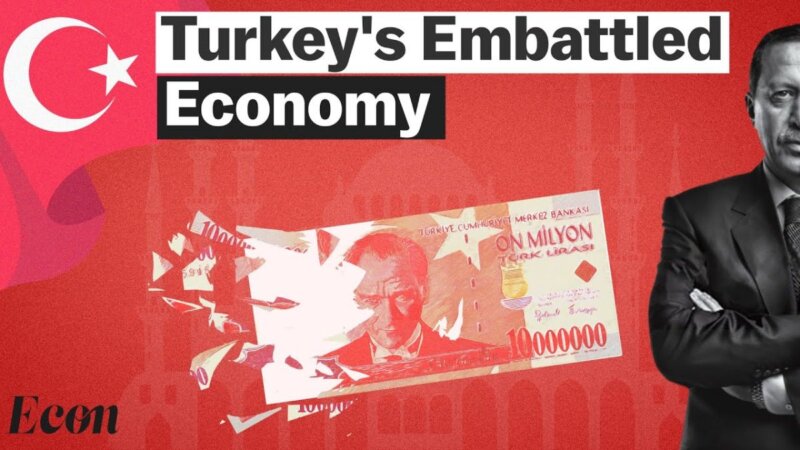
The Decline of the Turkish Lira and Its Impact on the Economy
This year, the Turkish Lira has suffered a sharp decline in value, losing nearly half of its value against the U.S. dollar. This has made it the worst-performing of all emerging market currencies, and inflation is skyrocketing. Many economists and investors fear that Turkey‘s economy could worsen before it gets better, and much of the blame is placed on the policies implemented by Turkish president Recep Tayyip Erdogan.
The Turkish Economy
Turkey has a population of 83.4 million and is an emerging market economy with the world’s 20th-largest nominal GDP. The country is a leading producer of various products, including agricultural goods, textiles, motor vehicles, and consumer electronics. However, the recent decline of the Turkish Lira has caused significant concerns about the future of the economy.
The Role of Interest Rates in the Economy
President Erdogan’s decision to replace the head of the Central Bank with a political ally who was more willing to lower interest rates has sparked controversy. While low-interest rates can make borrowing more affordable for businesses and stimulate economic growth, they also have the potential to cause inflation if left unchecked. In Turkey, inflation is already extremely high, and the plunging currency is likely to worsen the situation.
The Impact on Imports and Exports
The decline of the Turkish Lira has had a significant impact on imports and exports. While a weakened currency makes imports more expensive, it also makes exports more profitable. However, the benefits of increased exports are being overshadowed by the negative effects of soaring inflation on the Turkish people’s living standards.
The Challenges Ahead
Aside from inflation and a weakening currency, Turkey is also facing challenges related to its external debt and banking system. The country’s banks have a significant amount of external debt coming due, and many locals have begun withdrawing their deposits in foreign currencies. This could potentially lead to a depletion of the banks’ foreign currency reserves and further destabilize the economy.
Conclusion
While Turkey‘s economy has shown signs of growth, the impact of the declining Lira and inflation on the country’s citizens has been significant. Additionally, the country’s financial institutions are facing potential challenges that could further exacerbate the economic situation. It is clear that political and religious motivations should not drive economic policies, as they can have severe consequences for the overall health of the economy.
Disclaimer:
The information contained in the video or post represents the views and opinions of the original creators, and does not necessarily represent the views or opinions of YeniExpo. The Video Content or Post has been made available for informational and educational purposes only.
YeniExpo does not make any representation or warranties with respect to the accuracy, applicability, fitness, or completeness of the Video or Post Content. If you find any of your copyrighted material in this post or video, please contact us, so we can resolve the issue.
© All rights reserved by respective owners.
Please Share Article Above🔝
Turkish Manufacturers: 5 Proven Ways to Slash Your B2B Logistics Costs
Turkish Furniture Manufacturers: Superior Wholesale Designs for Global Buyers
YeniExpo VIP Services: How We Digitize Complex Industrial Catalogs with Surgical Precision
The 48-Hour Digital Catalog: Why YeniExpo’s VIP Data Entry is the New Standard for Turkish Exporters
How to increase your exports to the Middle East and Europe using YeniExpo
Five Key Advantages for Chinese Exporters Joining YeniExpo.com
Featured Products
Commercial Gas Cooking Units 4, 6 Open Burners and Oven for Restaurants
Industrial Metal Shredder Machine Scrap Powerful Recycling 2021
Irmak Green Table Pickled Olive 600 g in Plastic Jar
RevivaClean Automatic Carpet Washing, Rug Cleaning Machines NEW King Model 270-420cm
Biomate Colonia Hand Lemon Cologne 80° Premium Quality 400ml,1000ml,5000ml Pack
Exquisite Gold Abaya Cap Luxury A237216GL
Promotional Artificial Leather Table Top Office Set ORN-1001
Tactical Breathable Combat Frog Suit Classical Camouflage Outdoor uniform
Baldo Cooking Rice Superb Tasty Rc 11 Turkish Wholesale
[the_ad_group id="19807"]