
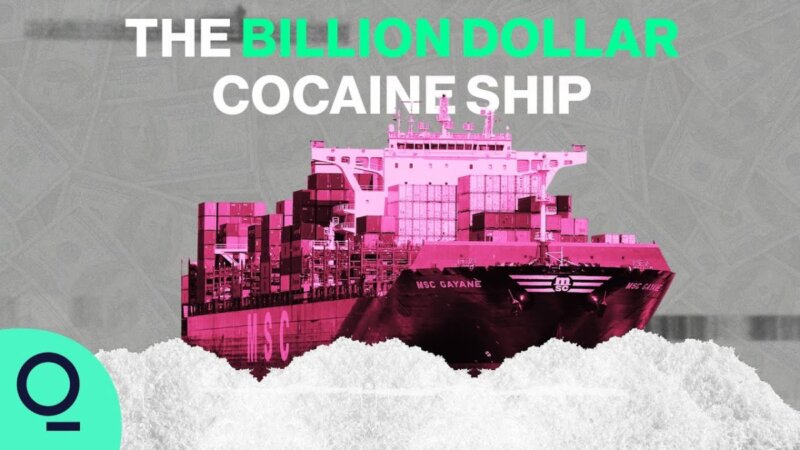
The Feds are investigating one of the largest drug busts in US history. Back in June of 2019, news of a massive drug seizure in the port of Philadelphia broke, revealing a staggering 20 tons of drugs being confiscated in a single seizure. Authorities estimated that these drugs could have had a street value of over 1 billion dollars. This drug bust was not just like any other. It involved an unprecedented level of crew involvement and was orchestrated by a prominent shipping company, MSC (Mediterranean Shipping Company).
The shipping industry plays a critical role in the globalized economy, with 90% of global trade being conducted on ships and 14 trillion dollars worth of goods being moved around the world annually. However, this also creates immense pressure on ports, shipping companies, and customs authorities to ensure that global trade runs smoothly and quickly.
The ports of Northern Europe, particularly Antwerp in Belgium and Rotterdam in the Netherlands, have long been central to global trade, making them prime locations for drug traffickers to exploit. Customs officials at these ports have discovered various ingenious ways in which traffickers attempt to smuggle drugs, such as hiding them in cocoa beans, pineapples, and the structure of containers and trucks.
As the shipping industry continues to grow and evolve, so do the tactics of drug traffickers. The expansion of the Panama Canal in 2016 provided an opportunity for traffickers to use larger ships to transport more contraband. MSC, as the world’s largest shipping company, became a major player in the sea lanes from South America to Europe, particularly in the transportation of refrigerated goods, which presented an ideal opportunity for traffickers to conceal drugs.
The investigation into the large drug bust in Philadelphia revealed that the MSC Gayane, one of MSC’s massive ships, was at the center of the operation. Crew members, including the chief mate, played a crucial role in orchestrating the smuggling operation, hiding cocaine in containers while the ship was at sea. They were part of a well-organized system involving multiple ships and crews operating under the Balkan cartel, which recruited crew members, particularly from countries like Montenegro, where seafaring is a prominent profession.
The repercussions of this drug bust extended beyond the crew members involved. MSC was faced with a hefty fine of over 600 million dollars, the largest ever assessed against a commercial carrier. The company agreed to pay 50 million dollars to secure the release of the MSC Gayane, but the case is ongoing, with the US government seeking to show MSC’s culpability in the drug smuggling operation.
In conclusion, the drug bust involving MSC sheds light on the complex and challenging nature of combating drug trafficking in the global shipping industry. While authorities and shipping companies strive to implement various security measures, the vast scale of global trade presents significant obstacles in preventing the smuggling of illicit goods. The case of MSC serves as a cautionary tale for the shipping industry, with the potential to reshape regulations and enforcement practices in the fight against drug trafficking.
Disclaimer:
The information contained in the video or post represents the views and opinions of the original creators, and does not necessarily represent the views or opinions of YeniExpo. The Video Content or Post has been made available for informational and educational purposes only.
YeniExpo does not make any representation or warranties with respect to the accuracy, applicability, fitness, or completeness of the Video or Post Content. If you find any of your copyrighted material in this post or video, please contact us, so we can resolve the issue.
© All rights reserved by respective owners.
Please Share Article Above🔝
Turkish Manufacturers: 5 Proven Ways to Slash Your B2B Logistics Costs
Turkish Furniture Manufacturers: Superior Wholesale Designs for Global Buyers
YeniExpo VIP Services: How We Digitize Complex Industrial Catalogs with Surgical Precision
The 48-Hour Digital Catalog: Why YeniExpo’s VIP Data Entry is the New Standard for Turkish Exporters
How to increase your exports to the Middle East and Europe using YeniExpo
Five Key Advantages for Chinese Exporters Joining YeniExpo.com
Featured Products
HEDA 12 meter Self propelled electric scissor lift platform
New Product Teknofalt
Gobi Newborn Baby Wet Wipes 40 Count Per Pack 99% Pure Water NEW
Curd Filtering Vat 200 and 1200 lt
Milk Churn Stainless Steel 50 Liter Milk Can – Durable & Easy to Operate
Snakeskin Booties Womens Shoes ShowLife4 New Top Brand
Fennel Tea Herbal Nutritious Natural Dried 50g Packets
Turquagro Azim POYRAZ Series Farm Disc Tillers
Aksan DeepFresh Sweet Girl Baby Shampoo 500ml 12 Bottles per Carton S129
[the_ad_group id="19807"]