
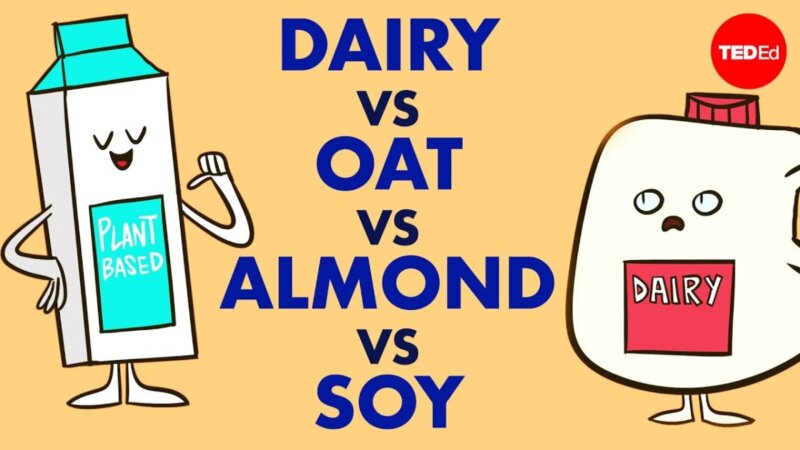
The Best Milk for You and the Planet: A Comparative Analysis
Introduction
When you go to the store in search of milk, you are faced with an overwhelming number of choices. Options range from traditional dairy milk to various plant-based alternatives. But which milk is the best for you? And which is the most environmentally friendly? Let’s explore the facts.
Dairy Milk vs. Plant-Based Milks
When it comes to nutritional content, dairy milk contains a significant amount of protein, carbohydrates, and fat. However, most plant-based milks have lower carbohydrates and fat, but are often fortified with “good fats” and other important nutrients. Additionally, while dairy milk naturally contains vitamin D and calcium, these are not present in most plant-based milks.
Comparing Plant-Based Milks
Among popular plant-based milks, almond and oat milk are low in protein compared to dairy. While almond milk has the least nutrients, oat milk is rich in beta-glucans, a healthy type of fiber. Soy milk, on the other hand, contains as much protein as cow’s milk and is also a great source of potassium.
Health Considerations
For individuals with specific dietary needs, such as lactose intolerance or nut allergies, choosing a plant-based milk may be the best option. However, for those with limited access to a diverse diet, dairy milk can be the most efficient way to obtain essential nutrients. Overall, each of the four milks discussed can be part of a balanced diet.
Environmental Impact
When it comes to the environmental impact of milk production, plant-based milks have a strong case. Dairy milk production requires a significant amount of land, contributing to deforestation and habitat destruction. Almond and soy milk also have relatively high land use, but are not as significant contributors to deforestation.
Water Usage
The farming stage of milk production is where significant differences in water usage emerge. Dairy milk uses the most water, primarily for watering cows and growing their feed. Almonds and soy also have significant water requirements, with almond trees requiring consistent watering over several years. In contrast, soy and oats require less water to grow.
Greenhouse Gas Emissions
Plant-based milks generate fewer greenhouse gas emissions compared to dairy milk. Dairy cows themselves produce significant emissions, contributing to climate change. In terms of environmental sustainability, plant-based milks, particularly oat and soy milk, have a strong case.
Conclusion
While the choice of milk ultimately depends on individual dietary needs, there is a compelling argument for choosing plant-based milks, particularly oat and soy, in terms of the health of our planet. Next time you’re at the store, consider the impact of your milk choice on both your health and the environment.
Disclaimer:
The information contained in the video or post represents the views and opinions of the original creators, and does not necessarily represent the views or opinions of YeniExpo. The Video Content or Post has been made available for informational and educational purposes only.
YeniExpo does not make any representation or warranties with respect to the accuracy, applicability, fitness, or completeness of the Video or Post Content. If you find any of your copyrighted material in this post or video, please contact us, so we can resolve the issue.
© All rights reserved by respective owners.
Please Share Article Above🔝
Turkish Manufacturers: 5 Proven Ways to Slash Your B2B Logistics Costs
Turkish Furniture Manufacturers: Superior Wholesale Designs for Global Buyers
YeniExpo VIP Services: How We Digitize Complex Industrial Catalogs with Surgical Precision
The 48-Hour Digital Catalog: Why YeniExpo’s VIP Data Entry is the New Standard for Turkish Exporters
How to increase your exports to the Middle East and Europe using YeniExpo
Five Key Advantages for Chinese Exporters Joining YeniExpo.com
Featured Products
Commercial Dough Kneading Machine 10-25 Kg Capacity
Burkini Bathing Suit Women Modest Swimsuit Swimwear – Lycra Long Sleeve 20s516 38-46
Berrak Furniture Zeynep Bedding Set
Solar Powered Street Light 50W to 300W 160 Lumens Per Watt
Promotional Corporate Brand Plastic Pen OVACIK 7721
Jeans Jackets Women SPECTACULAR Marie Mcgrath 2002
Modest Burkini Style Swimsuit for Women – Lycra Long Sleeve – Size Range 38-46 – 20s515
New Product Teknofalt
Extra Virgin Turkey OLIVE OIL Quality Wholesale 2022
[the_ad_group id="19807"]