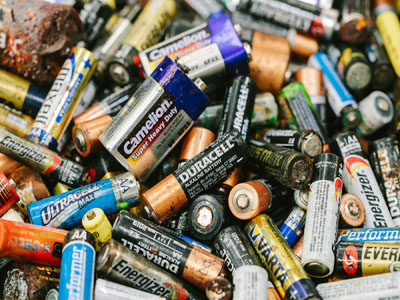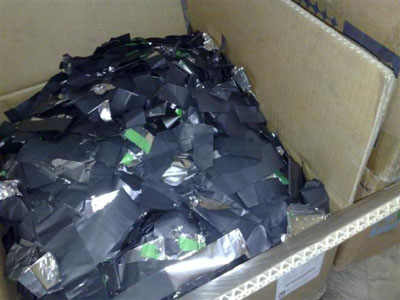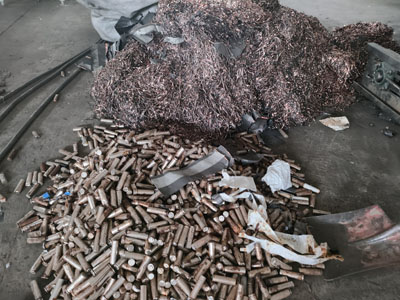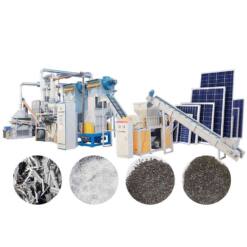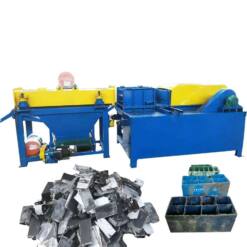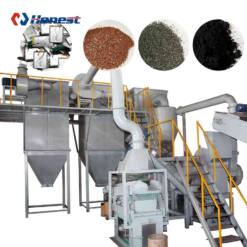
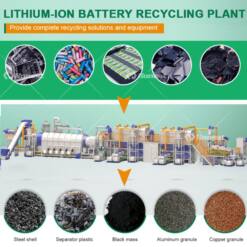
The treatment process of the lithium-ion battery recycling line is mainly to use mechanical equipment to carry out the processes of crushing, magnetic separation, winnowing, crushing, gravity separation, and screening after the recycled waste batteries are discharged, so that the positive and negative pole pieces The powder and copper and aluminum foil are effectively separated, and the battery is treated as a material containing valuable metals.
Technical Parameter
| Model | power(kw) | capacity (kg/h) |
|---|---|---|
| HN-LB300 | 55 | 300 |
| HN-LB500 | 82 | 500 |
| HN-LB1000 | 107 | 1000 |
The workflow of circuit board recycling line
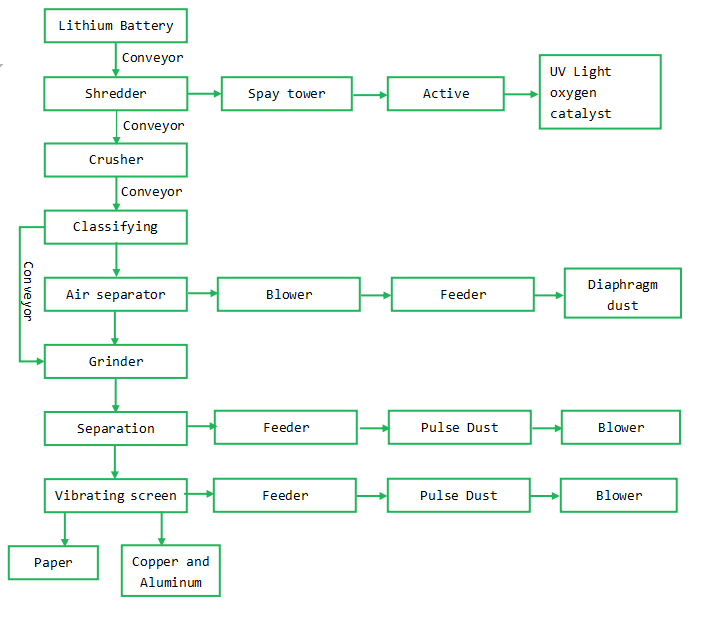
Types of working equipment for circuit board recycling lines
-

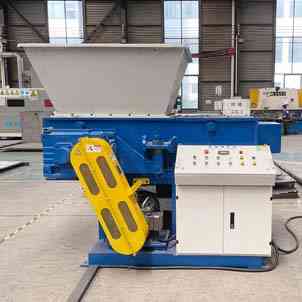
Single Shaft Shredde
Single shaft shredders are strong and durable. It is suitable for recycling various bulk solid materials, refractory materials, plastic containers and barrels, and plastic pads. Shredded particles can be as small as 20mm according to different needs. The equipment rotates the knife at low speed, low noise and more energy-saving.
-
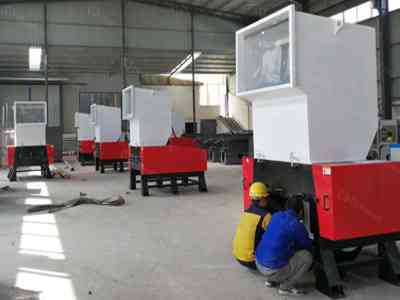
Knife Crusher
The knife crusher is suitable for recycling all kinds of hard plastics, suitable for recycling all kinds of hard plastics, sample bottles, containers, plastic granules, tablets, materials, plastic barrels, PP plastic plates, cans, Pu pipes, waste plastics , Waste cables, waste plastic films, plastic bottles, ABS computer cases and other plastic products.
-
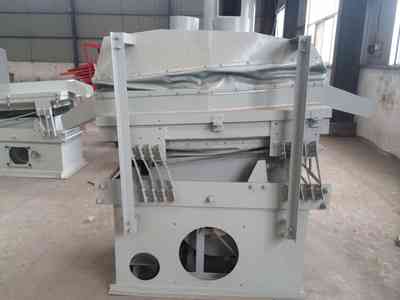
air separator
Airflow classifier is consisting of classifier, cyclone separator dust catcher, and draft fan. Material is up to classifier by strength of fan, separate fine material from coarse material under centrifugal force of grading turbine high speed rotation .and suitable fine material is collected by cyclone separator or dust catcher through grading impeller.
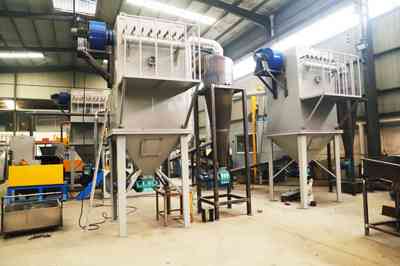
Pulse dust removal
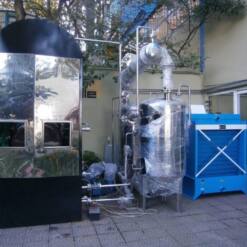
The dust collection system can be widely used for dust purification in various industrial fields such as hardware, cement, building materials, ceramics, electronics, chemical industry, shoe industry, casting, plastic, aluminum, metallurgy, electric power, leather, food, machinery and non-ferrous metals.
Application
The existence of lithium batteries is becoming more and more common now, ranging from small smartphones to large new energy (lithium battery) vehicles. This makes lithium battery recycling more and more popular. Below are some videos about lithium battery recycling equipment.
-
Small household lithium battery
-
Waste battery pole piece
-
scrap battery